When it comes to transporting dangerous goods, safety isn’t just a priority, it’s a requirement. A key factor in ensuring safe transportation is using packaging that is specifically designed and rigorously tested to protect what is stored inside.
Having manufacturers figure out the process on their own could lead to dangerous situations. That is why the United Nations has created international requirements, outlined in the Recommendations on the Transport of Dangerous Goods. Countries within Europe as well as the United States, Canada, Japan and Australia all work with these safety measures. This leads to standardisation and harmonisation in a world where there are already many certifications and labels.
Sounds complex? Let’s break down UN-certified packaging for you!
As we mentioned, the packaging requirements set up by the UN are designed to regulate the transport of dangerous goods. Companies have to follow a set of strict guidelines to package their goods to ensure they meet the safety standards.
To guarantee that goods will arrive at their destination unscathed, the packaging will first undergo rigorous testing to ensure it can withstand rough conditions. This is crucial for protecting both the environment and public health, preventing leaks, spills, and other potential hazards during transit.
For companies handling hazardous materials, using UN-certified packaging is mandatory. Failing to comply with national and international regulations can lead to serious legal consequences, shipment delays, and safety risks.

In order to get your packaging certified, companies will have to follow a series of steps. We will explain them in more detail below.
The first step in the process is to clarify what you are transporting and how you are going to do that. That way you can determine if you need UN-certified packaging or not.
To assess whether UN-certified packaging is necessary, ask yourself the following questions:
To simplify the process, the UN has established globally recognised categories for hazardous materials. There are nine different categories to choose from:

When you've identified the category of your goods, next is determining how they will be transported:
For example, flammable liquids transported by air pose a higher risk due to changes in pressure and temperature. This requires additional safety measures compared to ground transport.
The UN has established three levels of packaging (I, II, III) based on the degree of danger. The greater the potential danger, the stricter the packaging requirements become.
Once you've confirmed what kind of dangerous goods you are transporting, the next step is designing suitable packaging. It's essential to work with a company that understands UN-certified packaging and conducts a thorough preliminary assessment to ensure the packaging complies with the safety standards.
When a suitable package has been designed, an approved laboratory will carry out a series of standardised tests based on the specific characteristics of the packaged goods to test the package’s durability.
These tests are designed to simulate the real-life conditions the packaging may encounter during transport by road, rail, sea or air. To make sure these tests are as accurate as possible, companies must provide fully assembled packaging samples, including any inner packaging (such as bottles, cans, or liners) containing a product that has the same physical properties like viscosity, weight, structure but is not dangerous to the person executing the tests.
The packaging will undergo one or multiple tests:
Purpose: Assesses the packaging’s ability to protect contents from impact during accidental drops in transit.
How it works: Packaging is dropped from a specified height onto different surfaces (flat, edge, and corner drops) using specialised Drop Test equipment. The packaging may be crushed, this is acceptable when there is no leakage of the product itself.
Purpose: Ensures liquid-tight containment to prevent leaks and spills.
How it works: The packaging is submerged underwater while internal pressure is applied. If no leakage occurs, the packaging passes the test.
Purpose: Verifies the packaging’s ability to withstand different pressure conditions during transport, which is especially critical for air freight.
How it works: The packaging is subjected to varying pressure levels to simulate conditions at high altitudes.
Purpose: Determines the packaging’s durability under stacking conditions during storage and distribution.
How it works: Weight equivalent to a full stack of packages is applied for at least 24 hours to ensure the packaging can maintain structural integrity.
Purpose: Tests the maximum pressure tolerance of the packaging.
How it works: The packaging undergoes the Pressure Test again, but this time with a 20% increase in applied force to verify its ability to withstand extreme conditions.
Purpose: Measures resistance to sharp objects and potential punctures.
How it works: The packaging is subjected to controlled impacts from sharp objects moving at different speeds and force levels. The test is successful if the object fails to breach the packaging.
Once all tests are successfully completed, a detailed report is compiled, outlining the test results. This report is then submitted to the national regulatory authority, which gives the final stamp of approval in the form of a UN-compliant packaging certification.
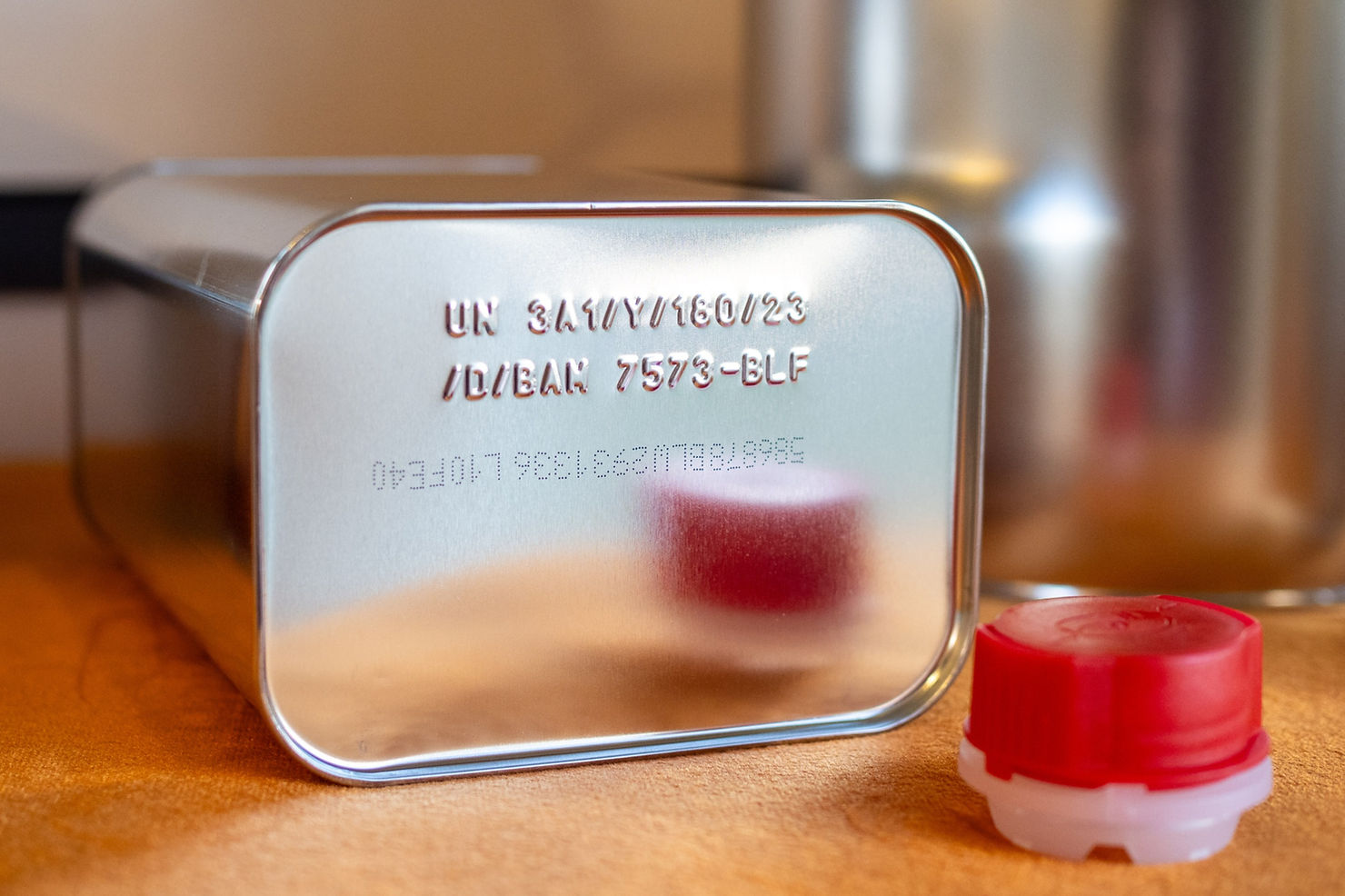
As part of the certification, the approved package has to be labeled (e.g., printed) with a unique code for easy identification. This code provides critical details about the packaging’s design, capabilities, and approved usage.
Understanding these codes is essential. Using the wrong packaging or assembling it incorrectly can invalidate the certification, compromise its safety and lead to regulatory violations. For example, once a package is approved for a specific weight, it cannot be used for a different weight without risking safety.
At first glance, reading the codes may seem complex. Let’s break down what each code means:

For example, UN 3A1/Y/180/23/D/BAM 7573-BLF means UN-certified Jerricans Steel Closed head/medium danger/max weight 180kg/production year: 2023/country: Germany/ Manufacturer or Approval Agency: Blechwarenfabrik Limburg, GmbH
The final step in the UN-certified packaging process is ensuring compliance. While packaging may pass rigorous testing and receive UN certification, this approval is not permanent or without conditions. To maintain certification and uphold safety standards, specific requirements must be met throughout the packaging’s lifespan. It is a continuous process, with periodic reassessments and design adjustments if necessary to adapt to regulatory changes or material innovations. Your UN packaging may be checked by organisations like ILT (Inspectie Leefomgeving en Transport) to ensure they are still on par with the highest standards.
UN packaging is a packaging specialism that requires in-depth knowledge of regulations, materials, and testing procedures. Our team has gone through specific UN packaging training and has studied the ‘wetboek’ ADR on how to transport dangerous goods. We can guide you through the certification process from creating the right packaging for your goods to making changes to ensure your compliance.
Whether you need assistance with packaging design, testing, or regulatory approval, our team is here to help you navigate the complexities of UN-certified packaging with confidence.
Other
We often choose local production to shorten lead times, reduce transport and increase flexibility. This keeps supply chains efficient and ensures packaging fits your product and operations.
Read more →

Other
Based on which features do consumers decide if a package is sustainable? We wanted to gain insight into this, and outline our findings in this blog.
Read more →

Other
Packaging is more than protection: it is part of your brand experience. The moment a customer opens your package is your opportunity to make a strong first impression and strengthen how they experience your brand.
Read more →